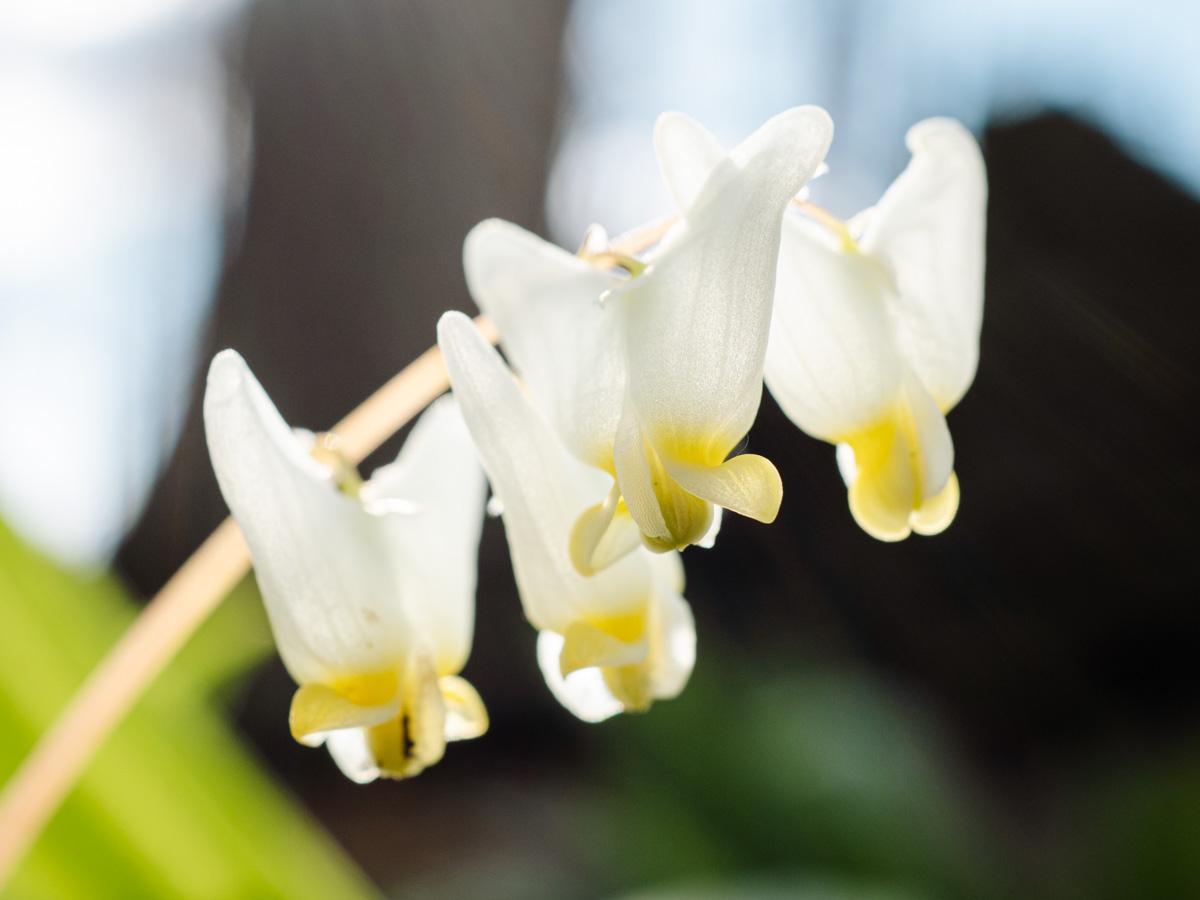
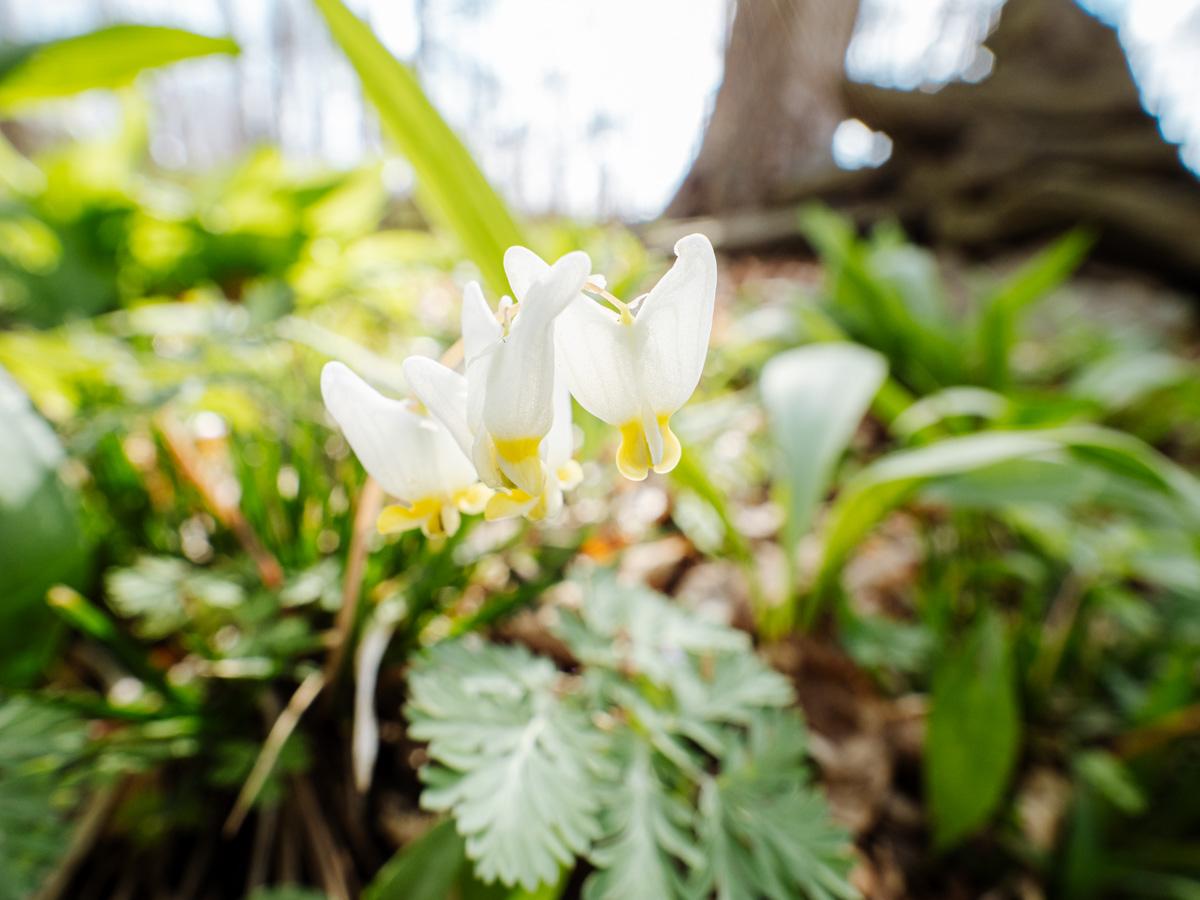
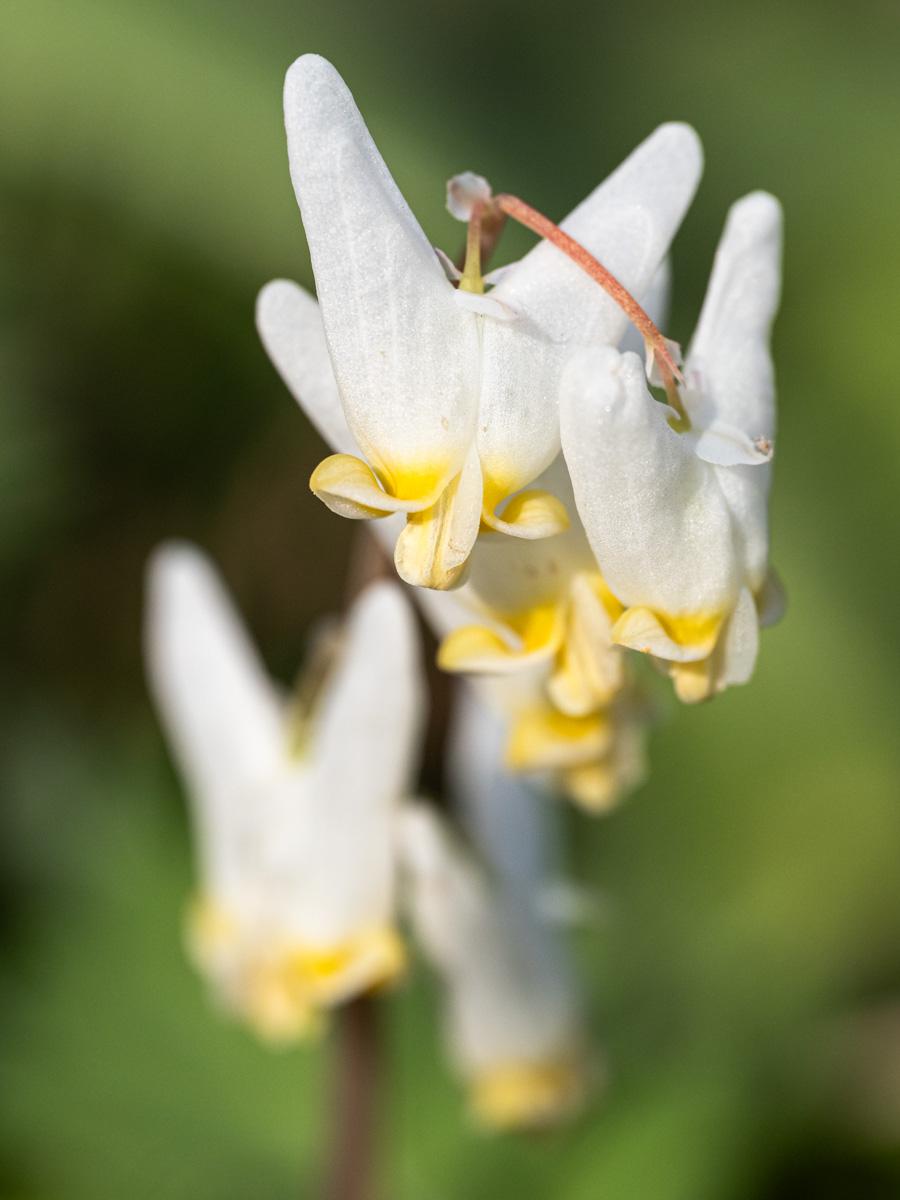
As the sprig beauties hid their midway point is roughly when the next round of wildflowers appears in the woods, with an accelerating spread of green across the forest floor. These distinctive white and yellow blossoms are Dutchman’s breeches, a native species that prefers the partial-shade of the forest before the trees leaf-out.
I appreciate the old-timey name, and the paler, miniaturized resemblance to the bleeding heart plant that grows in my own flower garden. That resemblance can be traced back to a shared family between the two plants, although their genus is different.
Dutchman’s breeches time is short, again lasting only a couple of weeks at most before the forest conditions change and they vanish into the undergrowth. By the time they are fading, spring is in full effect, and a number of other wildflowers have appeared to take their place, competing with an expanding array of pollinators.
The full range of early spring wildflowers are a challenge photographically, primarily due to their short stature. Spring beauties, Dutchman’s breeches, and trout lilies all grow to be only a few inches tall, and certainly less than a foot. Working with them means working with the camera at ground level, which imposes limits on angles and framing options. I sometimes work with a mini tripod for additional stability, but am often handheld and relying on the camera’s fold-out screen, since the viewfinder is unreachable.