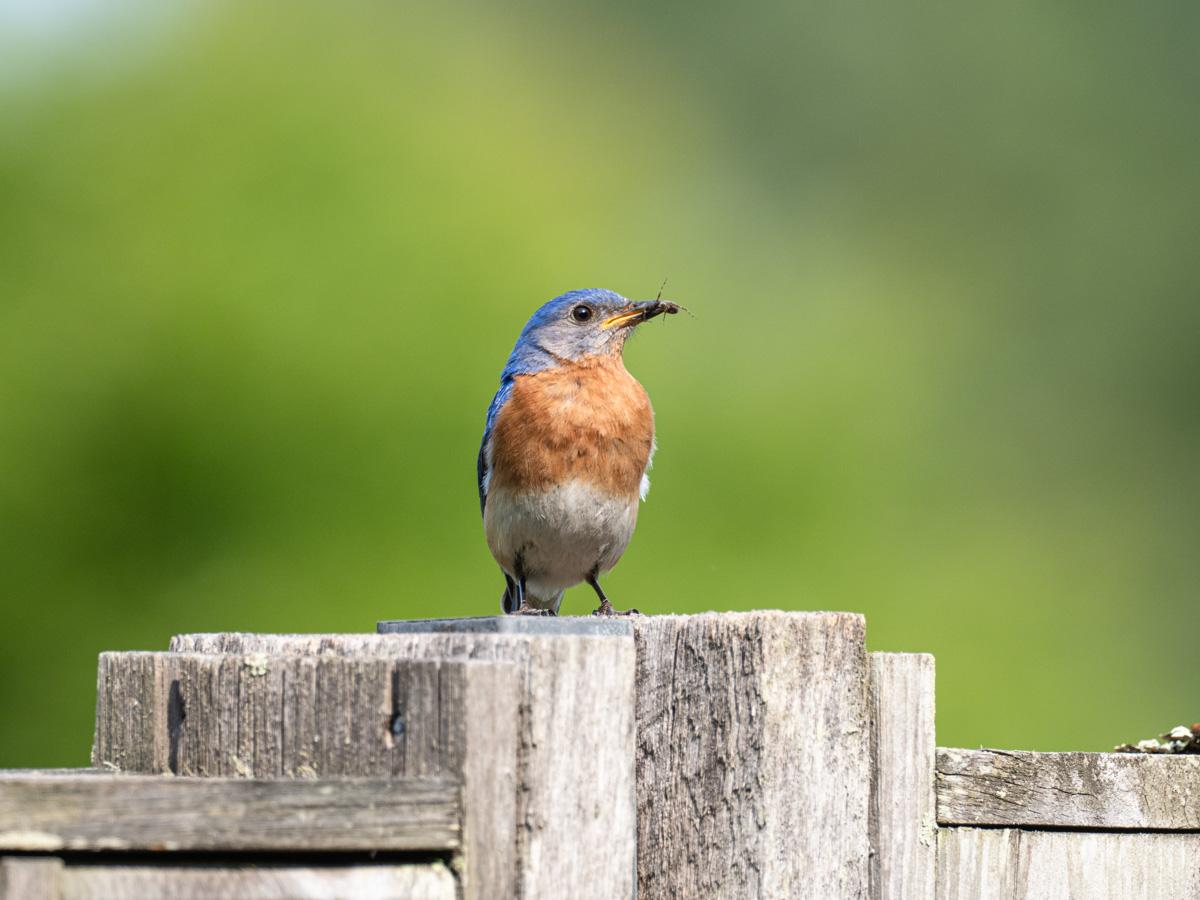
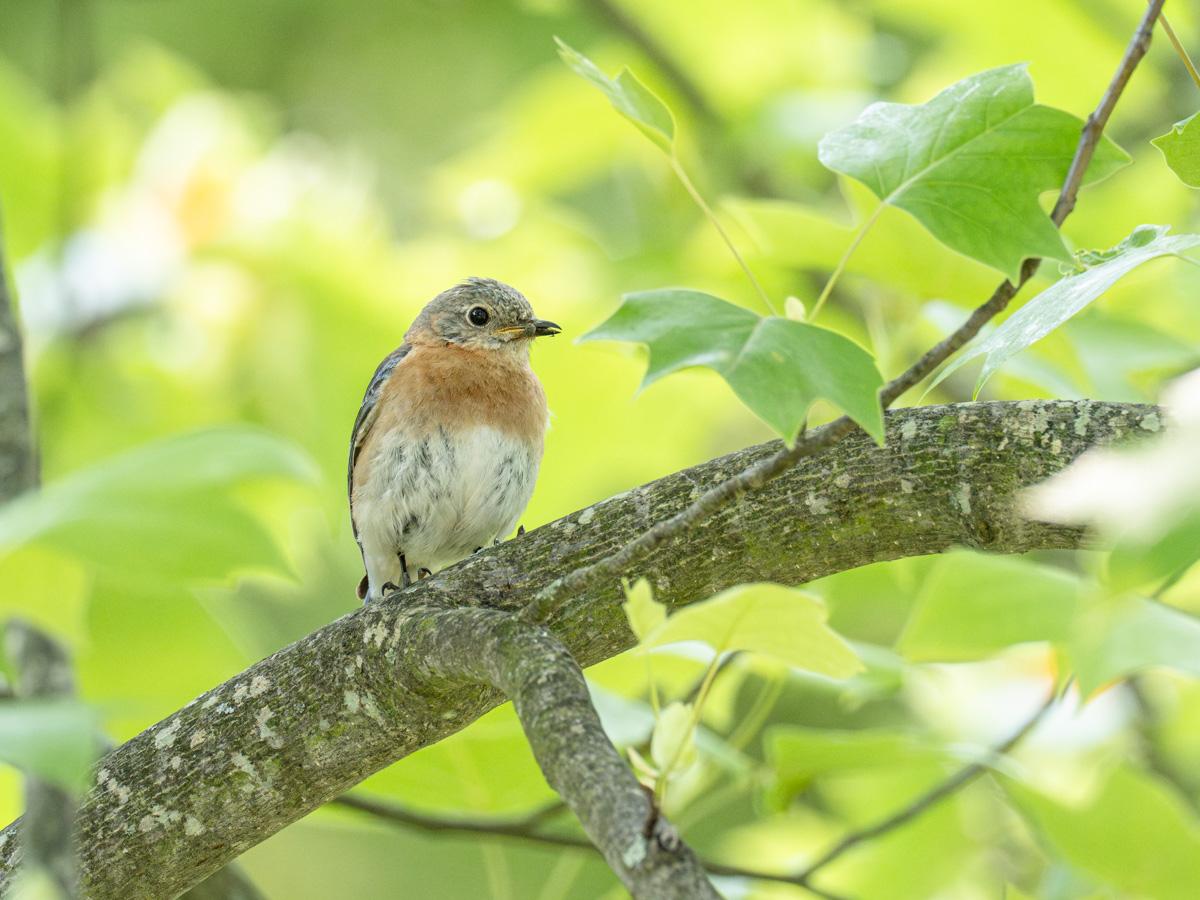
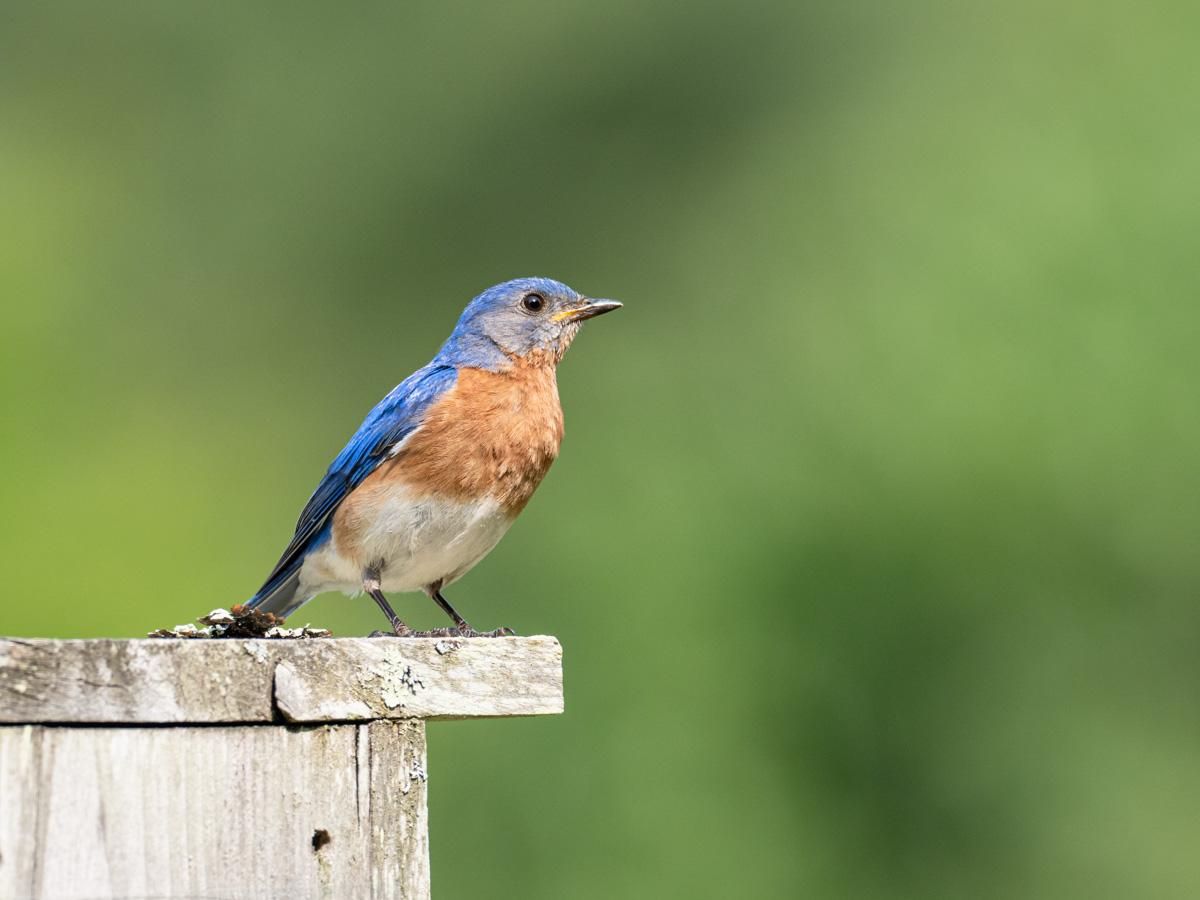
Another morning encounter with eastern bluebirds this past summer, where I was fortunate enough to watch both parents in their endless cycle of feeding. Nestlings are basically insatiable, and both parents spend this period constantly hunting for insects in the surrounding trees and brush, and carrying them back to the nest. Their only break seems to come when another animal intrudes into their territory, at which point their priority shifts to defense.
There’s a delicate balance in working with these birds as a photographer, where my desire to always get just a bit closer is weighed against the level of proximity that they find acceptable. If I move too close and present as a threat, the parents will cease their feeding cycle and move to a perch so as not to lead a potential predator to their nest.
With most birds, the best results come from patience and incremental movement; I begin working with them at a longer range and try to remain still and unobtrusive to build a level of comfort with them. Over a period of time – sometimes a few minutes, sometimes an hour – I’ll work my way closer, a few inches or a foot or two at a time.
In this case I got a bit of an edge; first, this nestbox was within a parking island at one of the state parks, so this pair of bluebirds already had a certain familiarity with people in their territory. Better yet, the parking lot was nearly empty, so I was able to use my car as a rolling bird blind, and position it for a good angle relatively near the nest box. Most animals recognize humans as a threat, or at least something to be wary of, but will show significantly less concern for a vehicle. As much as we get out and like to experience nature, as a wildlife photographer there is a certain benefit to experiencing nature from the comfort of a car seat!