I’ve been a contributor to eBird for many years, using it to keep track of my life list and contributing to their citizen science initiative. For a long time, I kept track of my sightings in Field Notes notebooks (if you know, you know), although writing in them requires two hands, which was always unwieldy while birding with the camera and a long telephoto lens. Over the past couple of years I drifted to keeping track of my sightings in a notes app on my phone, since I could pull it out and type with just one hand. This worked better, except for one issue: I rarely got around to transcribing these notes, in paper or on my phone, into eBird.
This summer I’ve switched to using the eBird app directly on my phone, and logging my sightings directly as I make them. I don’t know why I didn’t do it this way all along, since it’s both easier and ensures that my observations actually get submitted…
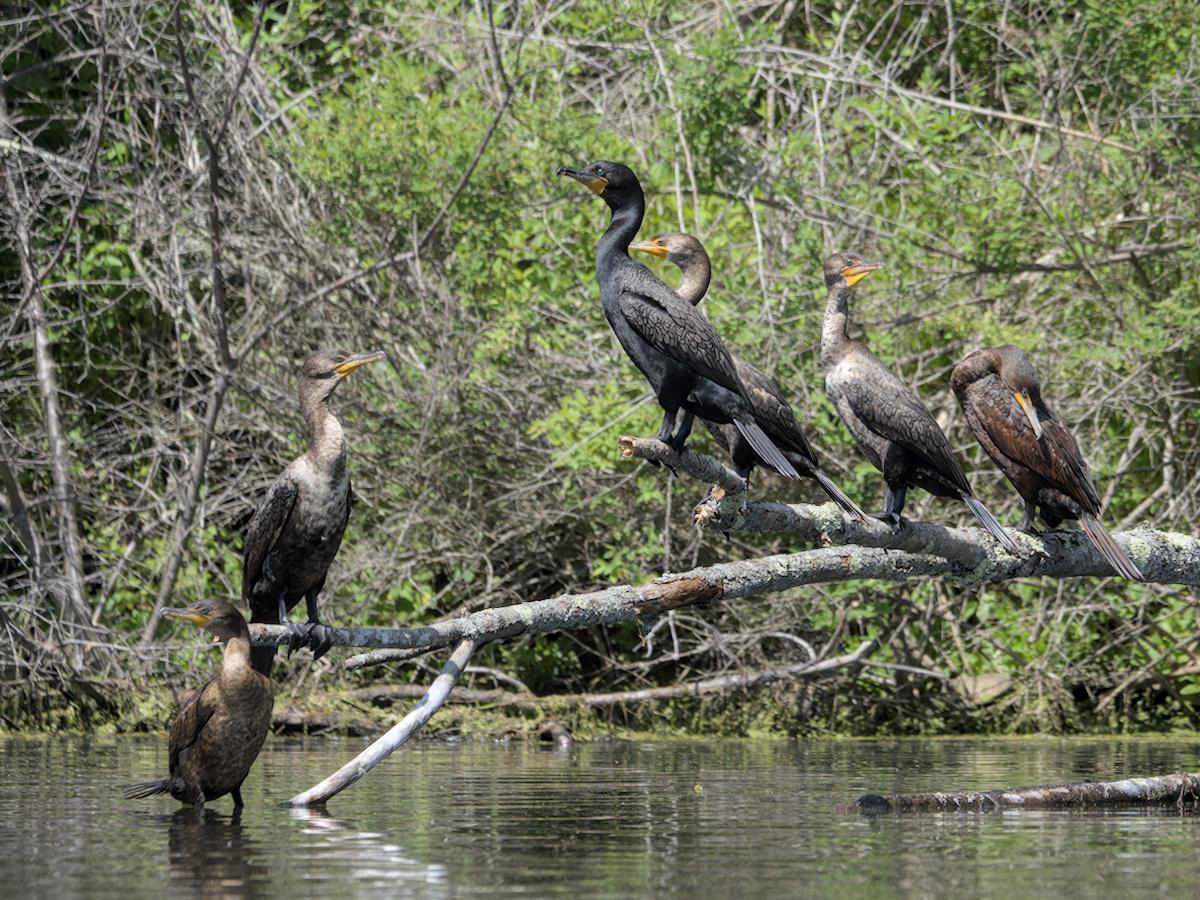
At any rate, now that I am eBirding in the field, I had the singular pleasure of having the app question my accuracy when I recorded six double-breasted cormorants in early June.
Six? Are you sure? That’s uncommon.
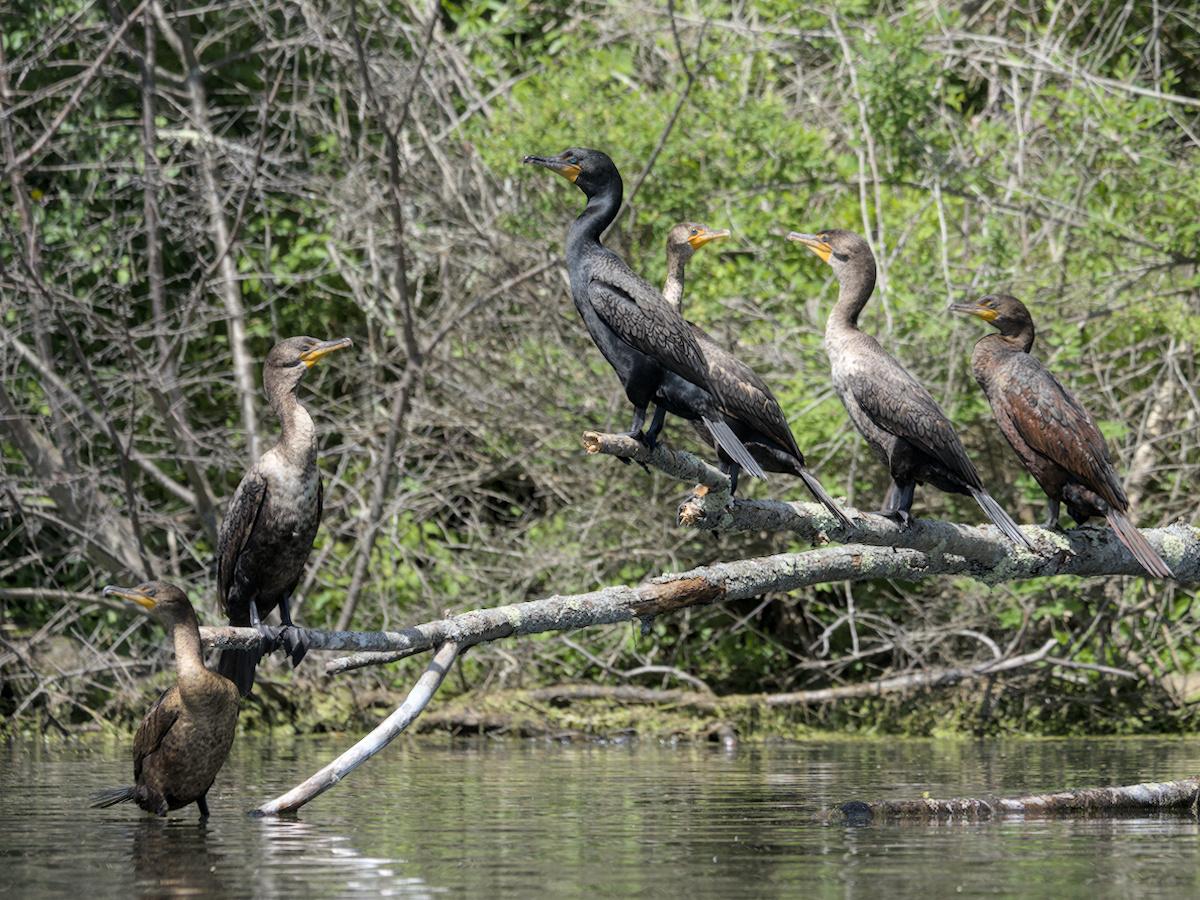
I grinned as I looked up from my phone screen to the family of cormorants perched atop a downed tree that extended out over the lake, and recounted: 1, 2, 3, 4, 5, 6.
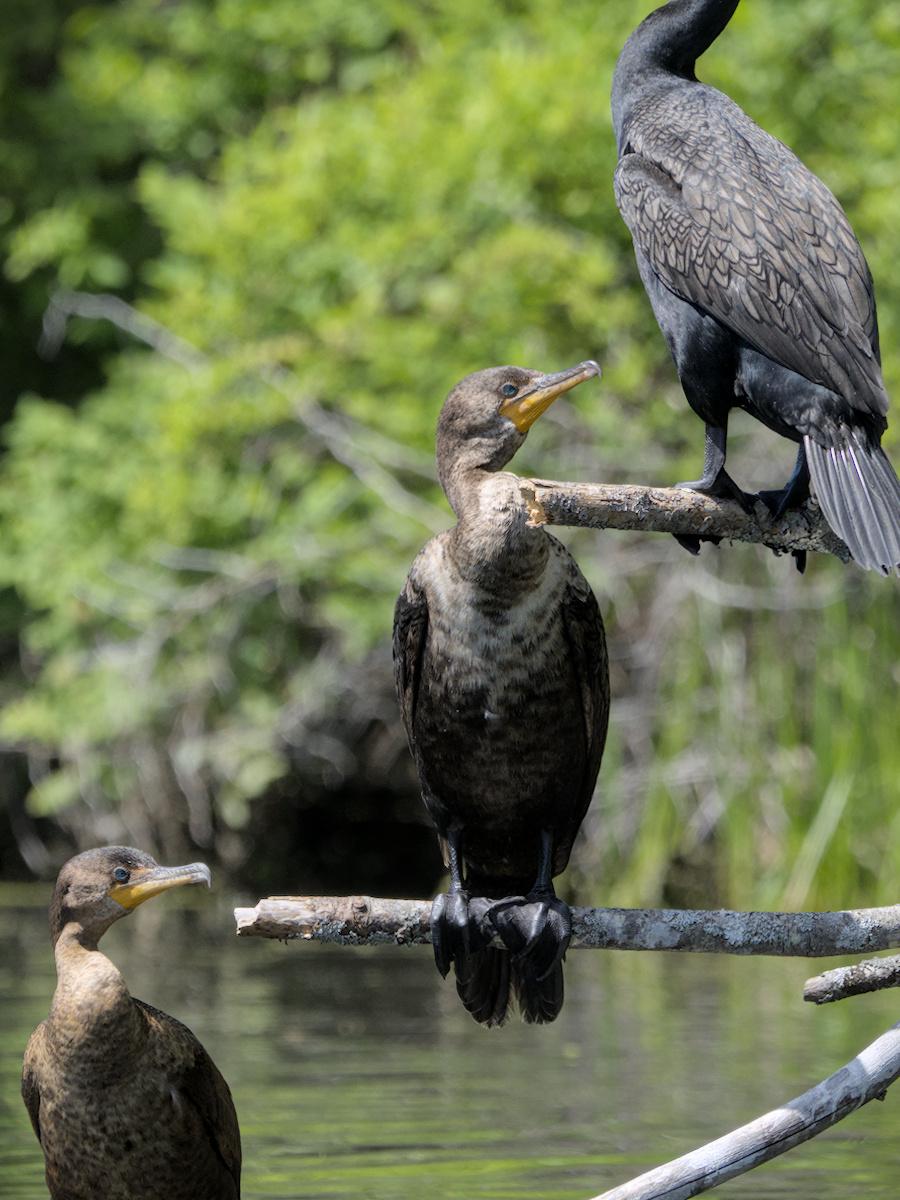
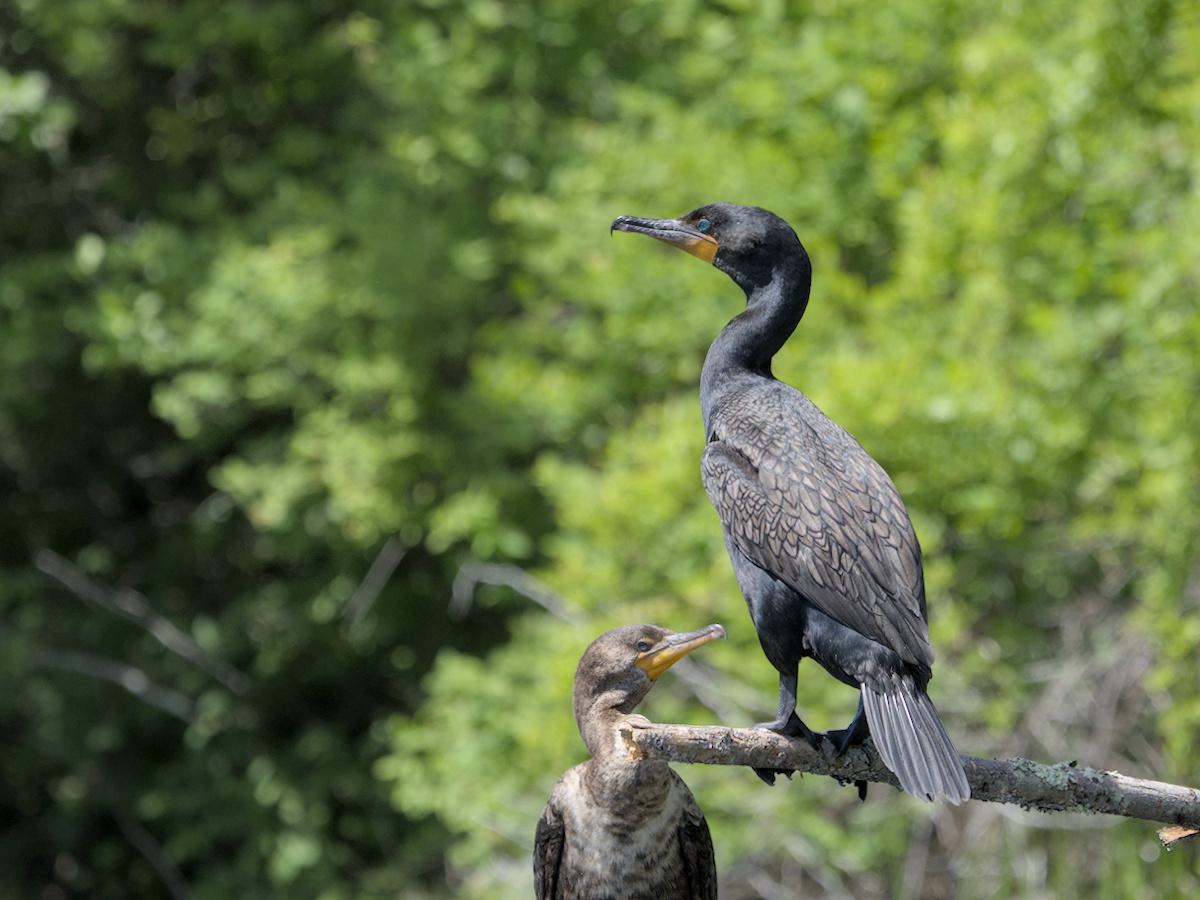
I am fairly certain that this is a cormorant family, with two adults and four juveniles. Cormorants are a common visitor to the lake throughout the summer, although in fairness I usually see fewer than three at a time, and do not usually see them perched together like this.
But six on a log, from the kayak, made for a great photo opp, even if the light was a bit harsh as we neared midday.
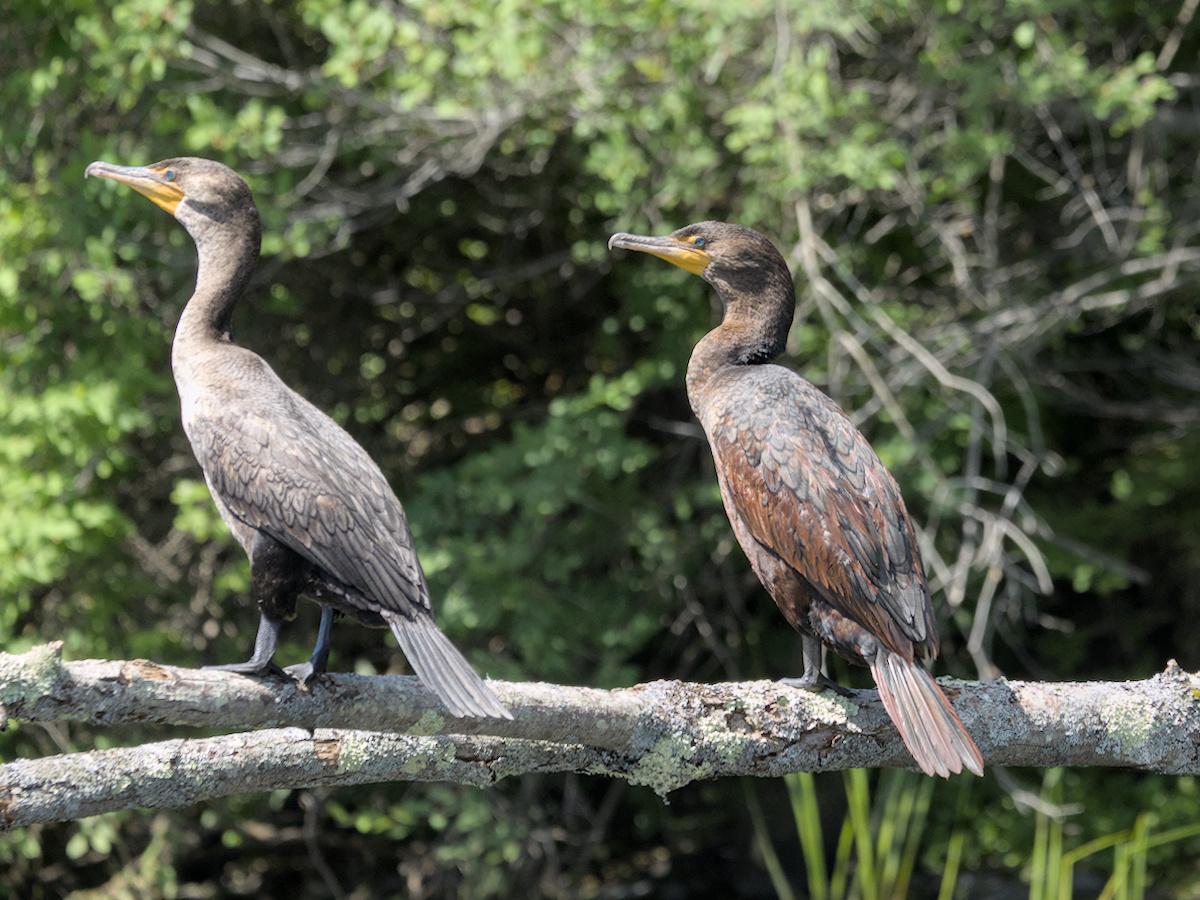
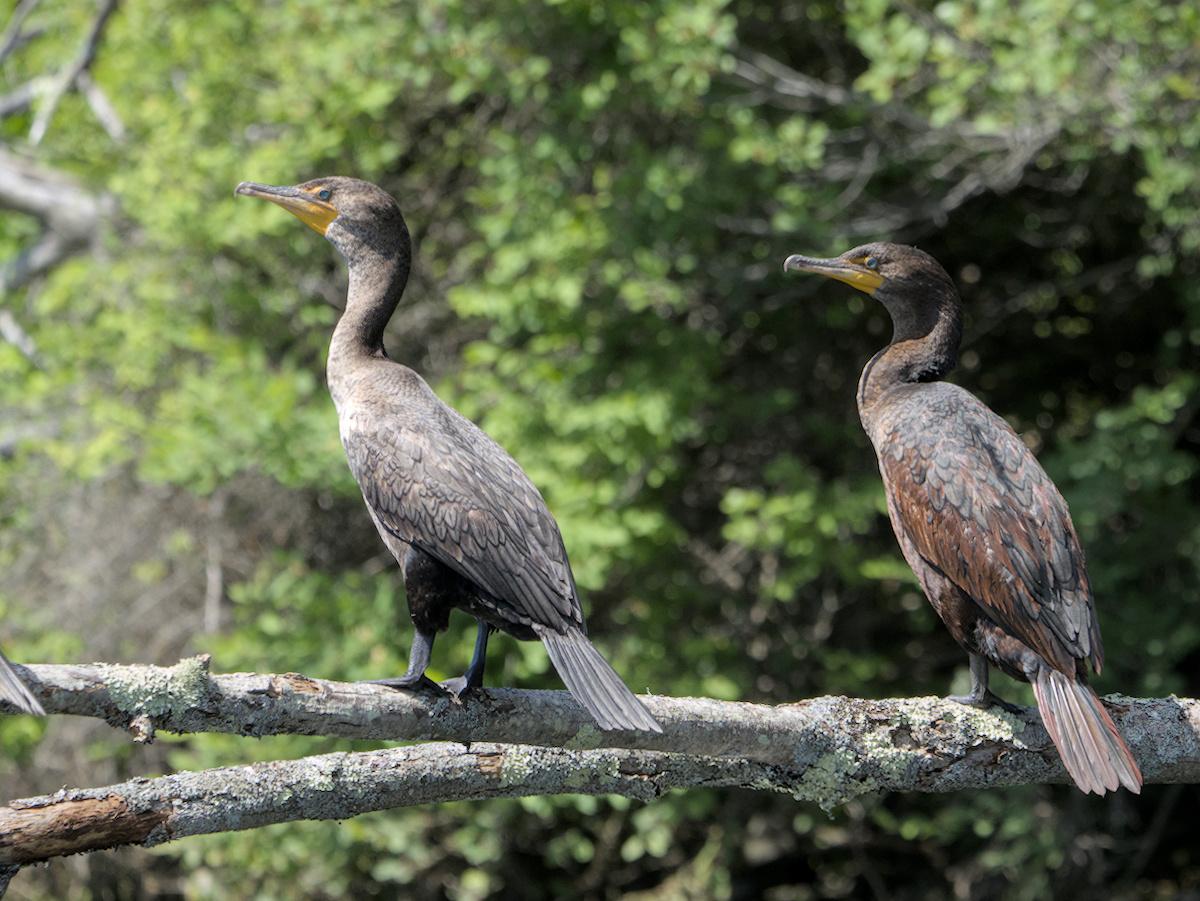
If you look closely, you can see that double-breasted cormorants have blue eyes – a startling shade of blue, in fact, which always feels unexpected no matter how many times I encounter them. This family (flock?) ignored me for a little while as I observed them, before finally flying off after I had moved on to searching for warblers along the shore.