Some of the best wildlife advice I can offer is: engage all your senses. As humans, we tend to rely heavily on vision, and this is especially true for photographers, and even more so when we’re peering through the camera trying to compose. The resulting tunnel vision – no pun intended – can easily have us filtering out other inputs without realizing it. Case in point, I was scouting for birds at Jacobsburg Environmental Education Center in what should have been prime habitat, and felt like I wasn’t having a lot of luck. I had seen a house wren and was waiting for him to reappear near his nest, when I finally dawned on me that I had been hearing a racket from the trees behind me all along.
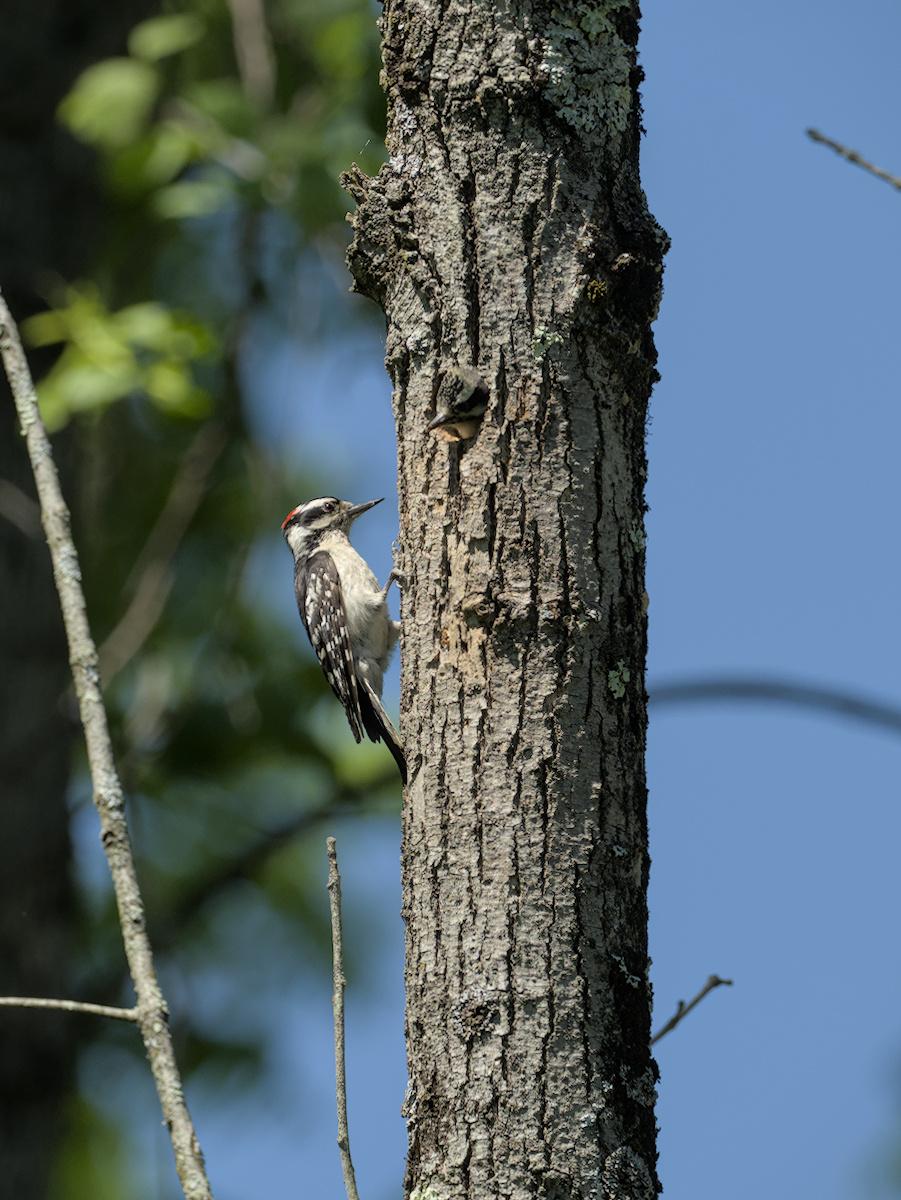
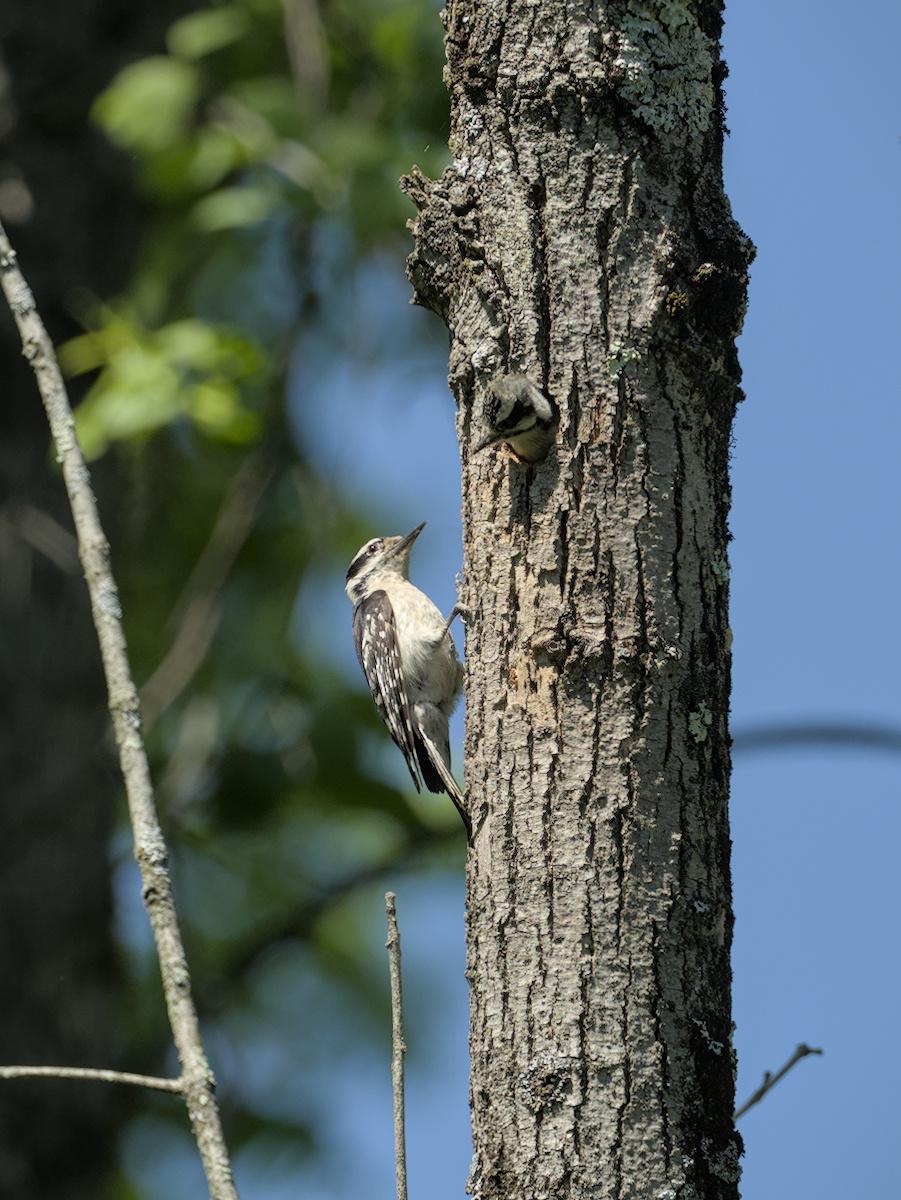
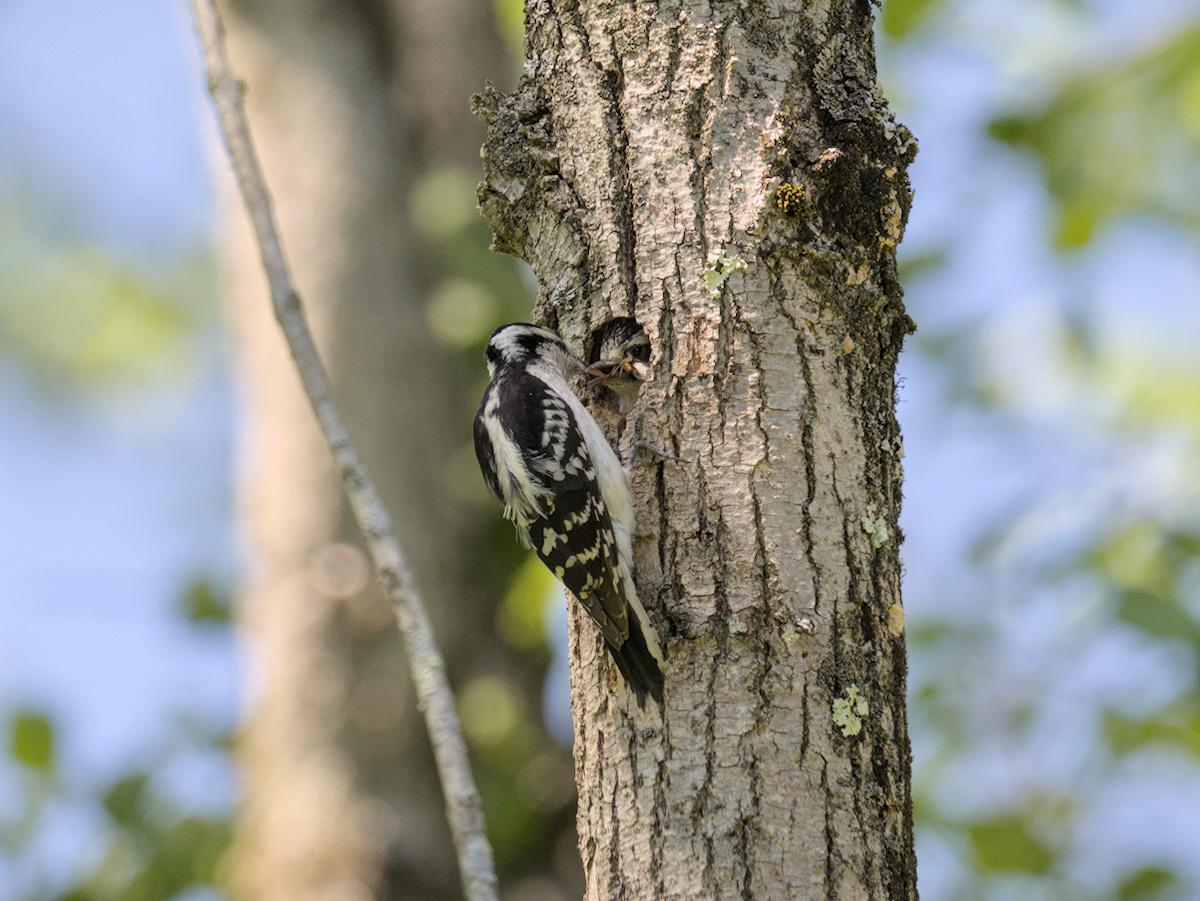
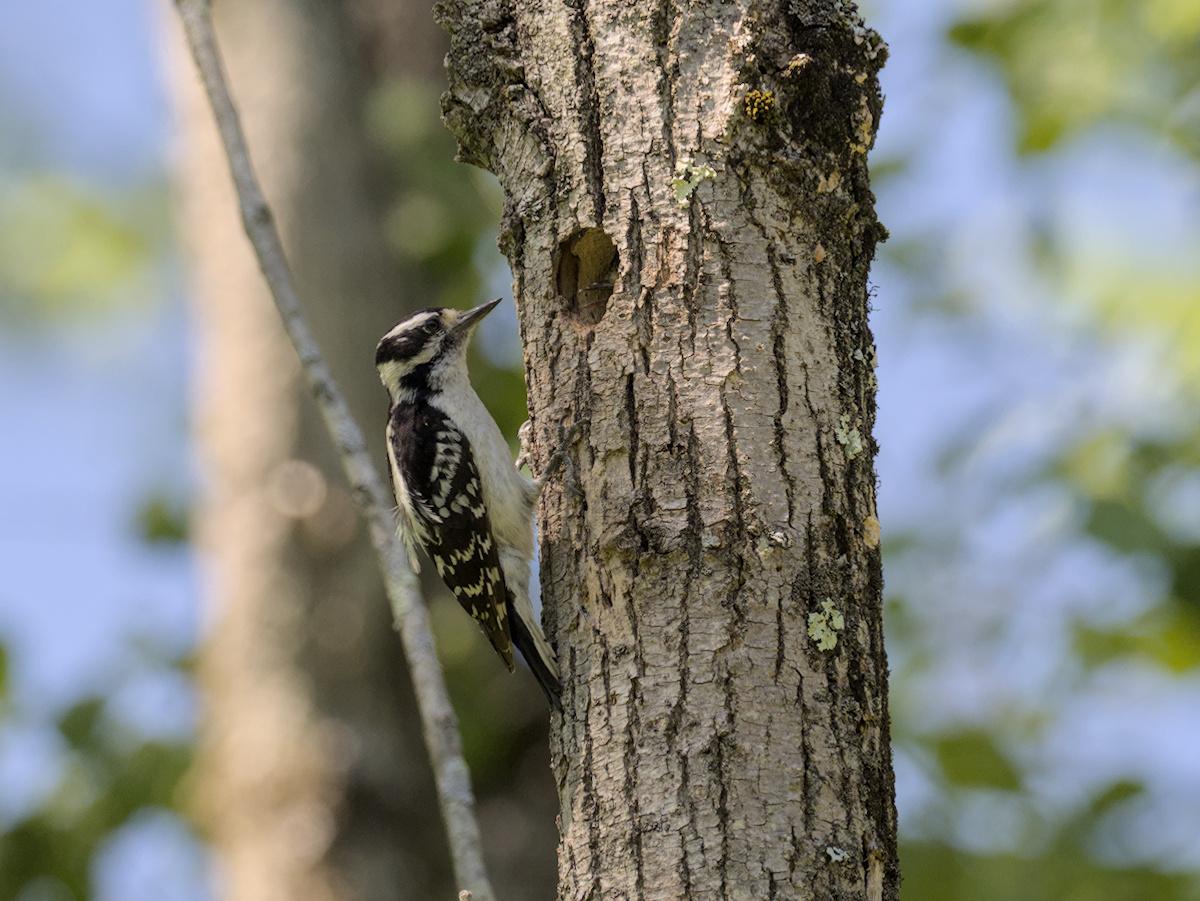
It was clearly a bird, calling the same loud, shrill note repetitively, but it didn’t sound like an alarm call. I’m not as strong with bird calls as I probably should be, so I used the Merlin app on my phone, which immediately identified it as the call of a hairy woodpecker. I zeroed in on the direction the calls were coming from and watched for motion, and within minutes I spotted a woodpecker returning to a tree trunk, where he led me directly to his nest cavity.
The racket of calls was, no surprise, young hungry woodpeckers within demanding food. I was able to watch for about a quarter of an hour as the parents came and went, bringing food to their noisy brood, which never seemed satisfied.
Turns out it isn’t just sight and sound that are helpful while birding – as odd as it may sound, smell can play a role too. Certainly bird poo is stinky, and that odor may help us track down a tree popular with perching raptors. But on a more specialized level, I have hosted nesting robins in my backyard for the past 6 years, and have come to know the scent of a nest with nestlings! It is a very distinct dusty, musky smell, and the moment I encounter it I know precisely what it is.
Which is not to say that I plan to go sniffing around the forest looking for nesting birds – but if I were to come across the smell in the field, and was paying attention I would know that a nest was near.